
Showing posts with label History of Technology. Show all posts
Showing posts with label History of Technology. Show all posts
Monday, June 30, 2014


Monday, June 23, 2014
Great interview with inventor of Kevlar, Stephanie Kwolek (RIP)
I love this story. RIP,
Stephanie Kwolek.
More here
https://www.bostonglobe.com/metro/obituaries/2014/06/20/stephanie-kwolek-kevlar-inventor-dies/0eq0BduuRrYErT3Jkn4xJP/story.html
http://www.npr.org/blogs/thetwo-way/2014/06/20/323951708/stephanie-kwolek-chemist-who-created-kevlar-dies-at-90?sc=tw
"I love learning and I'm love learning
new things, making discoveries...
while her mother encourage creativity
and even a future in fashion design, her father was a naturalist and inspired
stephanie's curiosity about the outdoors.
I had a father who was very much interested and plants and
trees. I spent a lot of time
just roaming through the woods looking [and putting plants and leaves in a scrapbook].
She goes on to talk about creativity and the process of innovation.
More here
https://www.bostonglobe.com/metro/obituaries/2014/06/20/stephanie-kwolek-kevlar-inventor-dies/0eq0BduuRrYErT3Jkn4xJP/story.html
http://www.npr.org/blogs/thetwo-way/2014/06/20/323951708/stephanie-kwolek-chemist-who-created-kevlar-dies-at-90?sc=tw
Thursday, March 13, 2014
Yahoo buys vizify, shuts it down

Vizify shuts dow:
From Vizify:
Keep your bio online a bit longer We've created a way to archive a snapshot of your bio so that it remains online at Vizify a while longer. You have until April 7, 2014 to archive your bio. Your archived bio will remain publicly visible through September 4, 2014.
If you make changes to your bio after you’ve archived it, you’ll need to re-archive it for those changes to stick.and...
For those who opt-in to archive a snapshot of their bio, the Terms of Service will continue to apply until September 4, 2014. For those who do not opt-in, the Terms of Service will continue to apply until April 7, 2014. In both cases, the Terms of Service will terminate and all licenses granted to you will be revoked on the specified date.More here: https://www.vizify.com/yahoo#transition and here http://www.ctvnews.ca/sci-tech/yahoo-buying-binge-continues-with-vizify-takeover-1.1717044
Monday, March 3, 2014
Who knows what these pages hold - library movie - vintage find
Alain Resnais, filmmaker of Hiroshima Mon Amour and Last Year at Marienbad, died yesterday aged 91. He also made a documentary about libraries! Of course, it's gorgeous!
Tuesday, December 31, 2013
The future of print books - crystal ball gazing
Over the past few months, if not years, I keep reading about print books becoming obsolete. I don't think that will happen - at least, not entirely. I see parallels between print books and vinyl.
In high school, I worked in a record store that was transitioning from vinyl to CDs (cassettes and albums kind of co-existed, but CDs were seen as an actual replacement). By the end of the year, we were to be CD only. I remember my manager saying that "CDs are the future - albums are obsolete!"
So, we marked all of the vinyl down - first 50%, then to 1$. When we could no longer sell the 1$, we gave them away with a purchase of a CD. Cassettes were seen as still viable, so we marked them down 25% off and then transferred the remaining titles to a much larger store in a different city.
In the short term, he was right. Albums became hard to find. Turntables were hard to find, unless you were a professional DJ. Needles and other accessories became harder to find.
Of course, now we know how right AND wrong he was. For the general music listener, music has gone digital. Warehouses of vinyl are destroyed. The world's largest collection of vinyl went up for sale with sales falling through again and again (although some reports that Leo Yao the inventor of the MP3 purchased the collection in 2011, it seems that record rama still has content?)
Whenever there are digitization projects, not everything is digitized. Sometimes the original can't be found or is in too bad of shape to digitize. Sometimes it is just too low on a priority list. Sometimes copyright/licensing is an issue. In fact, with the world's largest collection of vinyl (record rama):
Some journals drop the original print ads when they digitize older print volumes, just focusing on the "content."Yet, those ads can provide a wealth of information to pr, marketing, insights into changes in technology, etc.
...and then there is the experience and quality of the actual content. For print books, the smell of the book, the binding, the materials, the touch of the paper, plates, sound and feel of turning the pages (I read on my kindle regularly and when I do read a print book or magazine, I am always surprised at how NOISY it is), the differences in the printing fonts and layout (especially true in older books). For albums, a similar process from opening the sleeve to removing the inner liner, putting the record on, the sound... So, a complete entire experience - auditory, kinetic, visual, tactile.
I'm not sure we are there with e-content yet and I'm not sure we want to be. Will we get to the point of completely not caring about the advantages/disadvantages of one format over another? We seem to have with newspapers. Should we try to replicate a print book in an eformat? Why not make more interactive books and harness that ability? Why not create more visual albums, like Beyonce's new project (which follows in a long tradition of music movies except that it isn't truly a movie)?
So many interesting possibilities.
Regardless, of the how those formats will evolve, the reality is that big box stores are selling turntables again. Artists are pressing vinyl again. Collectors are collecting. (I even saw vinyl lps at a big box chain over the summer). Vinyl imagery is still in use in advertising. Audio archives and museums are collecting. However, the market right now is much smaller now and seems to be aimed at target audiences like collectors.
I see a parallel here with print books. Used book stores still exist and libraries still exist. The big box stores still sell some print books. However, I will not be surprised to see print books gradually disappear from the big boxes and fewer big bookstore chains with popular reading materials.
I do think that much like popular music listening, consumption of casual reading materials, will be different. In terms of new books, at some point, we will see a move towards more artisan quality books.Of course, before we see a major shift in general consumption of print materials, I do think some standards will need to happen (like the rise of MP3 as a common standard) and licensing (DRM) needs to be addressed.
References:
http://stoneyroads.com/when-digital-muscles-out-vinyl-a-sad-day-for-the-worlds-biggest-record-collection/
http://www.pbs.org/pov/thearchive/watch.php
http://losangeles.cbslocal.com/2014/01/01/worlds-largest-vinyl-record-mounted-atop-the-forum-in-inglewood/
http://www.messynessychic.com/2013/09/10/trying-to-sell-the-worlds-largest-record-collection/
http://www.recordrama.com/index.html
http://www.doobybrain.com/2012/05/11/1-2-1-wjeffstaple-feat-paul-mawhinney-of-record-rama/
http://abcnews.go.com/Entertainment/watch-beyonces-videos-visual-album/story?id=21207887
In high school, I worked in a record store that was transitioning from vinyl to CDs (cassettes and albums kind of co-existed, but CDs were seen as an actual replacement). By the end of the year, we were to be CD only. I remember my manager saying that "CDs are the future - albums are obsolete!"
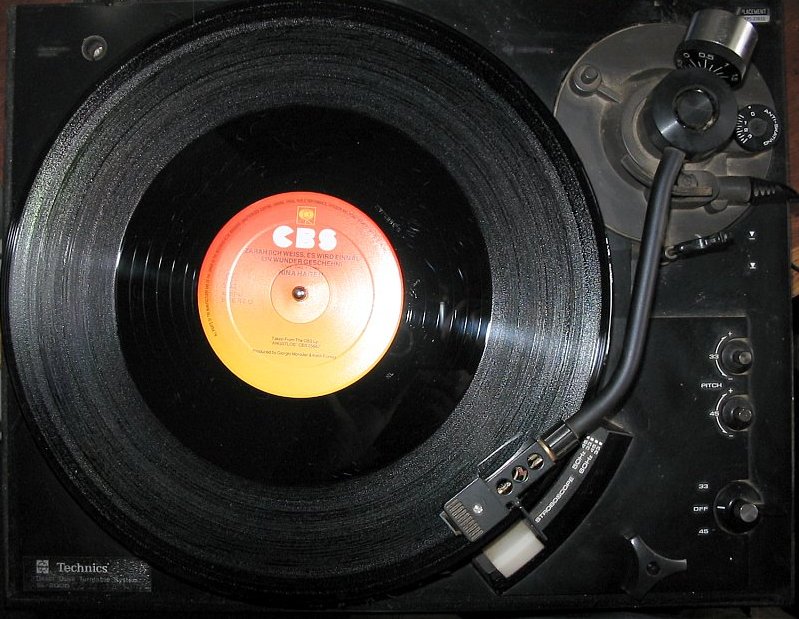 |
| Accessed from Wikipedia / © 2004 by Tomasz Sienicki {{GFDL}} |
In the short term, he was right. Albums became hard to find. Turntables were hard to find, unless you were a professional DJ. Needles and other accessories became harder to find.
Of course, now we know how right AND wrong he was. For the general music listener, music has gone digital. Warehouses of vinyl are destroyed. The world's largest collection of vinyl went up for sale with sales falling through again and again (although some reports that Leo Yao the inventor of the MP3 purchased the collection in 2011, it seems that record rama still has content?)
Whenever there are digitization projects, not everything is digitized. Sometimes the original can't be found or is in too bad of shape to digitize. Sometimes it is just too low on a priority list. Sometimes copyright/licensing is an issue. In fact, with the world's largest collection of vinyl (record rama):
Furthering the supposed value of his collection, the Library of Congress conducted a study on Mawhinney’s collection that found that only 17% of the entire assortment is available on CD, meaning a whopping 83% cannot be bought anywhere at anytime.By nature, print/vinyl is not entirely replaceable. It has value beyond the "content" - beyond the text, beyond the music. With albums as with books, there are graphical elements which may be poorly represented or lacking entirely from the electronic version. When I worked in a record store our pr materials (often large scale album covers) were always a hot commodity. People would ask when we were taking down a display so they could come back for the materials (I still have a couple of them myself). I remember my friends who worked at movie theatres had the same experience - popular movie posters were stolen out of the display box on more than one occasion.
Some journals drop the original print ads when they digitize older print volumes, just focusing on the "content."Yet, those ads can provide a wealth of information to pr, marketing, insights into changes in technology, etc.
...and then there is the experience and quality of the actual content. For print books, the smell of the book, the binding, the materials, the touch of the paper, plates, sound and feel of turning the pages (I read on my kindle regularly and when I do read a print book or magazine, I am always surprised at how NOISY it is), the differences in the printing fonts and layout (especially true in older books). For albums, a similar process from opening the sleeve to removing the inner liner, putting the record on, the sound... So, a complete entire experience - auditory, kinetic, visual, tactile.
I'm not sure we are there with e-content yet and I'm not sure we want to be. Will we get to the point of completely not caring about the advantages/disadvantages of one format over another? We seem to have with newspapers. Should we try to replicate a print book in an eformat? Why not make more interactive books and harness that ability? Why not create more visual albums, like Beyonce's new project (which follows in a long tradition of music movies except that it isn't truly a movie)?
So many interesting possibilities.
Regardless, of the how those formats will evolve, the reality is that big box stores are selling turntables again. Artists are pressing vinyl again. Collectors are collecting. (I even saw vinyl lps at a big box chain over the summer). Vinyl imagery is still in use in advertising. Audio archives and museums are collecting. However, the market right now is much smaller now and seems to be aimed at target audiences like collectors.
I see a parallel here with print books. Used book stores still exist and libraries still exist. The big box stores still sell some print books. However, I will not be surprised to see print books gradually disappear from the big boxes and fewer big bookstore chains with popular reading materials.
 | |||
| Marshall Town Public Library CC Attribution: http://www.flickr.com/photos/marshalltownpubliclibrary/ |
References:
http://stoneyroads.com/when-digital-muscles-out-vinyl-a-sad-day-for-the-worlds-biggest-record-collection/
http://www.pbs.org/pov/thearchive/watch.php
http://losangeles.cbslocal.com/2014/01/01/worlds-largest-vinyl-record-mounted-atop-the-forum-in-inglewood/
http://www.messynessychic.com/2013/09/10/trying-to-sell-the-worlds-largest-record-collection/
http://www.recordrama.com/index.html
http://www.doobybrain.com/2012/05/11/1-2-1-wjeffstaple-feat-paul-mawhinney-of-record-rama/
http://abcnews.go.com/Entertainment/watch-beyonces-videos-visual-album/story?id=21207887
Tuesday, October 15, 2013
happy ada lovelace day - tech, science, math, & geek girls!
Happy Ada Lovelace Day geek girls!
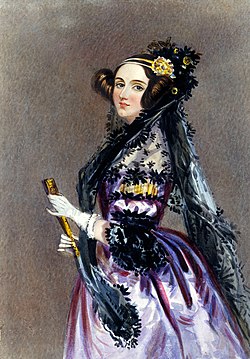 Celebrated on October 15th, the day aims to promote women
working in science, technology, engineering and mathematics, and encourage
female role models. It's named in honour of Ada Lovelace, who wrote an
algorithm for the engine in 1842 and is widely credited as being the world's
first computer programmer. (Robin note: She was the daughter of Lord Byron, a countess and called herself a poetic scientist)
Celebrated on October 15th, the day aims to promote women
working in science, technology, engineering and mathematics, and encourage
female role models. It's named in honour of Ada Lovelace, who wrote an
algorithm for the engine in 1842 and is widely credited as being the world's
first computer programmer. (Robin note: She was the daughter of Lord Byron, a countess and called herself a poetic scientist)
To celebrate we want to know your favourite female
scientist, engineer or mathematician past or present. http://bit.ly/2gWKB9
More also at http://en.wikipedia.org/wiki/Ada_lovelace
Tuesday, April 30, 2013
Embedded librarianship notes from an ACRL webinar
Getting started with Embedded Librarianship
1. Define partners
2. goals - priorities
3. How to embed
a. traditional classroom : co-teacher model; works well with 1st year students
b. embedding in LMS/ Course Manageemnt Systems “virtual” librarian
c. Project teams - business programs, student groups, etc.
d. liaison - student groups(?)
e. curriculum (accreditation, new departments, new programs, reorganization)
f. credit course (teaching)
David Schumaker - part to whole, engage meaningfully, history of collaboration and value of collaboration
Challenges
Staffing?
How could embedded librarians help with staffing? Spread out workload.
Where can embedded librarians make the most impact on student success?
Barriers
Others might not know what you do (opportunity to educate) and barriers within institution (inconsistency of curriculum)
Course specific technology - social media, wikis, tool itself doesn’t matter
Create reusable learning materials: learning objects, video, podcasts
Pilot project - embedding custom content, team-teaching class
Scalable - collaborate with composition program on content development, literacy (example)
Success of the Embedded Librarian
Criteria for success - measures of growth in embedded librarianship
Online instruction only - eliminate face to face (radical but may be necessary if stretched then)
tinyurl.com/ACRLembed worksheet
Assessment
Think of assessment as a way to tell the story of your project
Revision-Goal setting - Collaboration- Planning/Design-Assessment (a loop)
Embedded vs. one shot instruction
Measure student learning over time vs. learn about your teaching style that day
Collect and compare longitudinal data
- Research questions + keywords (easy to do with LMS)
- Search strategies
- Citation analysis
- Pre-test/Post-test (not especially effective for creative writing or humanities)
- Attitude inventory
- Reflection
- Log Data
http://www.ala.org/acrl/onlinelearning/elearning/courses/embedded
Thursday, November 15, 2012
One world, one blog - merging identities, merging blogs
 |
| robinart 2006ish |
Yes, changes are afoot in more ways, than one. I need to simplify my virtual life a little. I will keep my domains for now although I will begin to mirror them - robinfay and robinart will be mirrors. I haven't quite decided what to do with my scattered social media - flickr, twitter, linkedin, etc. but those are on the list to tackle too. My newly designed sites will be aggregates of my content. Actually, I have been thinking about doing this for a while, but finding the time and motivation... well...
So, that is the scoop. You probably won't notice any difference unless you go back through the history or search for particular topics. What you will see is a lot more art. So, for the 8 readers I have (ok, there are more of you than that... lol)
Monday, July 30, 2012
Semantic Web Technologies & Social Search (Introduction to Metadata)
This first chapter outlines the book but also includes a nice overview of metadata and how it fits into the web at large (and really all of the records we create). If you are new to metadata or interested in learning how metadata works on the web (& perhaps, try a few projects), you are definitely the audience we were targeting.
While the context of the book is library related, the projects can easily be done by individuals, institutions, or businesses. Michael & I cover projects like enriching metadata in Flickr, building a web/contacts directory using microformats, and how to contribute to the very cool civil war history semantic web project (thanks to Jon Voss) - among many other projects. Along the way, we discuss metadata (did you know your camera creates metadata?) and show you how to use metadata for better searching across the web - the whole web - social media to the wild web. Semantic Web and Social Searching
While the context of the book is library related, the projects can easily be done by individuals, institutions, or businesses. Michael & I cover projects like enriching metadata in Flickr, building a web/contacts directory using microformats, and how to contribute to the very cool civil war history semantic web project (thanks to Jon Voss) - among many other projects. Along the way, we discuss metadata (did you know your camera creates metadata?) and show you how to use metadata for better searching across the web - the whole web - social media to the wild web. Semantic Web and Social Searching
Sunday, June 24, 2012
Lantern slides - technology and art
 |
| Lovely lantern slide of the Library Library, Tring Museum, London.from American Museum of History http://www.facebook.com/amnhlibrary |
In terms of look and technology, they are a cross between a high quality photocopy and photograph. Many of these are handtinted, which gives them a beautiful artistic and sometimes dreamy look.
 |
| from American Museum of History http://www.facebook.com/amnhlibrary |
Not only is this a fascinating glimpse into our history and culture, but also into an early technology. So, wander over there and take a peak. Enjoy!
Tuesday, June 19, 2012
Meebo retirement date July 11! Hurry!
Meebo users: Meebo rides off into the sunset on July 11.
-----------------------------
As a past Messenger user, we wanted you to know that until July 11 you can download your archived Messenger chat logs. Log into your account on Meebo Messenger for a download link. Please act soon — after July 11, chat archives will be deleted.
You may remember meebo was purchased by google... Kind of like what happened with picnik but at least picmonkey (former picnikers have taken up the charge...)
-----------------------------
As a past Messenger user, we wanted you to know that until July 11 you can download your archived Messenger chat logs. Log into your account on Meebo Messenger for a download link. Please act soon — after July 11, chat archives will be deleted.
You may remember meebo was purchased by google... Kind of like what happened with picnik but at least picmonkey (former picnikers have taken up the charge...)
Tuesday, April 10, 2012
A history of automation and its impact on staffing (White paper/case study)
This white paper written by Virginia Feher and I started out as a conversation about the changes brought about by automation within the UGA Libraries. Over the years, I have documented some of the changes in automation (including 5 migrations/conversions of the ILS - Library catalog!) through discussions with colleagues within the Libraries and outside. This article not only provides a good overview of the impact of automation on one technical services unit within a library, but also a brief history of that automation. I also believe these changes are analogous to what has happened across technical services librarianship. We frame our conversation around a question posited by Horny in 1985.
----------------------------
To improve access to their collections, academic libraries automated cataloging functions, replacing the card catalog with the integrated library system (ILS), greatly impacting the day-to-day activities of library staff. How does automation affect staffing in an academic library? Horny (1985), while discussing the effects that changing technologies might have on librarianship, speculated that libraries would require support staff with “higher levels of knowledge and skill,” which would result in “more interesting and lucrative” jobs, “attracting an excellent caliber of staff” (p. 57).
For the purpose of examining the effects of automation on academic library staffing, this paper will
provide a discussion of changes in workflow and staffing at the University of Georgia (UGA) Libraries
Cataloging Department starting in the late 1970s, focusing on the Database Maintenance (DBM) Section. The discussion will demonstrate how an increasingly automated environment at the UGA Libraries resulted in the reorganization of duties and, because of the need for employees with greater technical expertise, the re-classification of staff positions to higher levels.
read the full article at
COMO White Paper - The effect of automation on academic library staffing: A discussion
http://digitalcommons.kennesaw.edu/glq/vol49/iss2/7/
----------------------------
To improve access to their collections, academic libraries automated cataloging functions, replacing the card catalog with the integrated library system (ILS), greatly impacting the day-to-day activities of library staff. How does automation affect staffing in an academic library? Horny (1985), while discussing the effects that changing technologies might have on librarianship, speculated that libraries would require support staff with “higher levels of knowledge and skill,” which would result in “more interesting and lucrative” jobs, “attracting an excellent caliber of staff” (p. 57).
For the purpose of examining the effects of automation on academic library staffing, this paper will
provide a discussion of changes in workflow and staffing at the University of Georgia (UGA) Libraries
Cataloging Department starting in the late 1970s, focusing on the Database Maintenance (DBM) Section. The discussion will demonstrate how an increasingly automated environment at the UGA Libraries resulted in the reorganization of duties and, because of the need for employees with greater technical expertise, the re-classification of staff positions to higher levels.
read the full article at
COMO White Paper - The effect of automation on academic library staffing: A discussion
Recommended Citation
Fay, Robin and Feher, Virginia C. (2012) "COMO White Paper - The effect of automation on academic library staffing: A discussion," Georgia Library Quarterly: Vol. 49: Iss. 2, Article 7.
Available at: http://digitalcommons.kennesaw.edu/glq/vol49/iss2/7
Available at: http://digitalcommons.kennesaw.edu/glq/vol49/iss2/7
http://digitalcommons.kennesaw.edu/glq/vol49/iss2/7/
Wednesday, January 11, 2012
Facebook kills library's historical profiles
Sooo… Facebook has already killed the historical profile
accounts which were written about well... just about everywhere (Google Joe McDonald) although it seems like they also killed a potentially great PR and
marketing campaign.
Lewis and McDonald posted historically accurate status updates about their lives, photos of campus events such as “hop” dances and “Rugby Football matches” and listed musicians such as Scott Joplin and writers including Jane Austen among their favorites. Their profiles were hailed by many experts as a powerful example of social media’s power to bring history to life for a digitally absorbed generation.
But, as fake profiles, McDonald and Lewis clearly violated the first rule of Facebook registration: “You will not provide any false personal information on Facebook, or create an account for anyone other than yourself without permission.”
Thursday, October 13, 2011
on innovation, technological revolution, digital evolution & one Googler's rant
As many of you have seen now there was a public G+ post from a Google staff person; it has now been taken down and "leaked" (some are wondering whether it was intentionally leaked since there are claims that they have permission to republish it).
Anyhow, these are just my thoughts after reading it yesterday. The post itself is rather long and obviously not meant to be a formal piece of writing, but it is interesting with some very valid discussion points. If nothing else, it is an opinion piece on 2 different companies with very different workplaces and philosophies.
While it mostly focuses on his time spent at Amazon and more recently, Google, the more interesting bits are the thoughts on innovation. He talks about how Amazon made a commitment from the top to change how it worked. Amazon has become a very innovative company (in spite of my feelings about the confusing and unfriendly world of ebooks; I do love my kindle and shop regularly at amazon). I'm just one of millions. He also talks a bit about the culture of working for Amazon at the time (micromanaging, cubeville). The second part covers his time at Google, especially in terms of product development. One thing he talks about is a lack of awareness of user experience/needs in terms of technology - Google looks for products vs. services. He also talked some about the good of Google - their work environment, community service, etc.
What I got from reading this post is that Google culture (& not necessarily individuals although individuals in leadership positions do drive culture or conversely, stagnant it) does not really grasp the why of community driven content (such as social media). I said recently of G+ that unlike Facebook which has a centralized upload for photos, videos, posts, etc. ; for G+, it's picassa for photos, youtube for video, _____ ? (perhaps G buzz?) for posts. Not having an API makes it nearly impossible to push content from G+ to other social media networks. For alot of us, that is CRUCIAL.
Thinking about all of that, it seems that a lot of companies and organizations are struggling with adapting their workflows to new technology products (such as software) in the information age. Rather than trying to think about things in a new way, old thinking and understandings of the world are applied to the new workflow. Leadership (& others) do not grasp the fundamental point: our culture has changed. The way we do things should change - and it's not just the product being developed or the service being offered. It's not about taking our workflow and bending it around a new thing. While some would argue why fix (or break!) what's working - innovation NEVER comes out of stagnation. I would also argue that just because you can make a workflow (or worse - a WORK AROUND) work, does not make it a good, efficient, or productive workflow.
So, it really is a cultural shift - yes, Michael Wesch really did know what he was talking about almost 5 years ago when he posted the Machine is Us/ing Us on Youtube:
...and this is where we are. Digital advocates (fundamentalists? I hate the term digital natives and technological stereotyping based upon age, btw) don't see technology as something that is frivalous (ok, maybe the Xbox is); technology just is. Having technology at hand (& connected - egads the U.S. needs more wifi) is an expectation. Creating content is part of life now -- and that act of creating content and sharing it is driving new ways of looking at work, new workflows - community sourced knowledge.
It's easy to create one post and post to many automatically; to "mashup" (who says mashup anymore? nobody) multiple formats to create a new digital object; to repackage, repurpose, reuse (recycle). One of the biggest fundamental changes that technology has delivered is the shift of power - creative power, especially. Anyone can take a photo and upload it Flickr. Anyone can create a website. So, if your everyday foundation involves using technology to create content and contribute (reviews, writings, etc.) and the tools support creating automatic linked paths (linking data), how can a workflow structured as a line from point A>E work? How can a business or organization SUCCEED as a traditional hierarchy with traditional linear workflows? Because after all, there is a big difference between succeeding and existing. ;-)
Looking at our history, the 2nd Industrial Revolution was focused on science and innovation and lasted until some time after WWII (I would say up through the 1960s and the peak of the space race). A lot of our corporate (but especially higher ed and govermental) workflows were put into place during that time.
For libraries and many information organizations, the 1970s were the beginning of the digital revolution (although it is usually dated as beginning in the 80s with the rise of PCs) and we saw the rise of automation in the 1970s-80s, moving from printed card catalogs to some sort of automated system (database) using MARC language. Nothing really has changed for libraries from the 1970s until the mid 2000s, except our platforms and databases got better (more integrated and powerful; data more portable; reduction of manual work).
As a whole, as the digital revolution became more fully realized, we saw the true beginning of the information revolution (focusing on service rather than products). We're now in the Information Age, with the rise of social media and mobile, community created content, "citizen" journalism, and immediacy of information (real time). WE all are creative collaborative -- well -- creators. As whole, we have moved fully into a service based culture focused with a dependence on technological tools; other members of our society are either catching up, will be forced to adapt once the culture changes around them entirely, OR will be left behind.
...and that is where many libraries and organizations got stuck. Due to budget cuts and an assortment of other issues (aging networks, outdated hardware, hierarchical structures, a lack of understanding of how cultural shifts impact organizations), the leap across from the digital revolution to the information revolution seems at times, nearly impossible. It involves a dedicated vision - not just a migration or conversion (both of which would leave behind remnants of old thinking, but a complete re-envisioning from the ground up. That's not to say that libraries (& others) should throw out all of their products (such as books) or their services (such as circulating those books), but that there are different ways of doing things (self check, ebooks sent automatically to account when available, etc.) but without addressing fundamental problems from a holistic view, the institution or library will never be truly innovative.
of course, some folks get this. Maybe everyone will one day.
-- just my thoughts (as always)
Anyhow, these are just my thoughts after reading it yesterday. The post itself is rather long and obviously not meant to be a formal piece of writing, but it is interesting with some very valid discussion points. If nothing else, it is an opinion piece on 2 different companies with very different workplaces and philosophies.
While it mostly focuses on his time spent at Amazon and more recently, Google, the more interesting bits are the thoughts on innovation. He talks about how Amazon made a commitment from the top to change how it worked. Amazon has become a very innovative company (in spite of my feelings about the confusing and unfriendly world of ebooks; I do love my kindle and shop regularly at amazon). I'm just one of millions. He also talks a bit about the culture of working for Amazon at the time (micromanaging, cubeville). The second part covers his time at Google, especially in terms of product development. One thing he talks about is a lack of awareness of user experience/needs in terms of technology - Google looks for products vs. services. He also talked some about the good of Google - their work environment, community service, etc.
What I got from reading this post is that Google culture (& not necessarily individuals although individuals in leadership positions do drive culture or conversely, stagnant it) does not really grasp the why of community driven content (such as social media). I said recently of G+ that unlike Facebook which has a centralized upload for photos, videos, posts, etc. ; for G+, it's picassa for photos, youtube for video, _____ ? (perhaps G buzz?) for posts. Not having an API makes it nearly impossible to push content from G+ to other social media networks. For alot of us, that is CRUCIAL.
Thinking about all of that, it seems that a lot of companies and organizations are struggling with adapting their workflows to new technology products (such as software) in the information age. Rather than trying to think about things in a new way, old thinking and understandings of the world are applied to the new workflow. Leadership (& others) do not grasp the fundamental point: our culture has changed. The way we do things should change - and it's not just the product being developed or the service being offered. It's not about taking our workflow and bending it around a new thing. While some would argue why fix (or break!) what's working - innovation NEVER comes out of stagnation. I would also argue that just because you can make a workflow (or worse - a WORK AROUND) work, does not make it a good, efficient, or productive workflow.
So, it really is a cultural shift - yes, Michael Wesch really did know what he was talking about almost 5 years ago when he posted the Machine is Us/ing Us on Youtube:
...and this is where we are. Digital advocates (fundamentalists? I hate the term digital natives and technological stereotyping based upon age, btw) don't see technology as something that is frivalous (ok, maybe the Xbox is); technology just is. Having technology at hand (& connected - egads the U.S. needs more wifi) is an expectation. Creating content is part of life now -- and that act of creating content and sharing it is driving new ways of looking at work, new workflows - community sourced knowledge.
It's easy to create one post and post to many automatically; to "mashup" (who says mashup anymore? nobody) multiple formats to create a new digital object; to repackage, repurpose, reuse (recycle). One of the biggest fundamental changes that technology has delivered is the shift of power - creative power, especially. Anyone can take a photo and upload it Flickr. Anyone can create a website. So, if your everyday foundation involves using technology to create content and contribute (reviews, writings, etc.) and the tools support creating automatic linked paths (linking data), how can a workflow structured as a line from point A>E work? How can a business or organization SUCCEED as a traditional hierarchy with traditional linear workflows? Because after all, there is a big difference between succeeding and existing. ;-)
Looking at our history, the 2nd Industrial Revolution was focused on science and innovation and lasted until some time after WWII (I would say up through the 1960s and the peak of the space race). A lot of our corporate (but especially higher ed and govermental) workflows were put into place during that time.
For libraries and many information organizations, the 1970s were the beginning of the digital revolution (although it is usually dated as beginning in the 80s with the rise of PCs) and we saw the rise of automation in the 1970s-80s, moving from printed card catalogs to some sort of automated system (database) using MARC language. Nothing really has changed for libraries from the 1970s until the mid 2000s, except our platforms and databases got better (more integrated and powerful; data more portable; reduction of manual work).
As a whole, as the digital revolution became more fully realized, we saw the true beginning of the information revolution (focusing on service rather than products). We're now in the Information Age, with the rise of social media and mobile, community created content, "citizen" journalism, and immediacy of information (real time). WE all are creative collaborative -- well -- creators. As whole, we have moved fully into a service based culture focused with a dependence on technological tools; other members of our society are either catching up, will be forced to adapt once the culture changes around them entirely, OR will be left behind.
...and that is where many libraries and organizations got stuck. Due to budget cuts and an assortment of other issues (aging networks, outdated hardware, hierarchical structures, a lack of understanding of how cultural shifts impact organizations), the leap across from the digital revolution to the information revolution seems at times, nearly impossible. It involves a dedicated vision - not just a migration or conversion (both of which would leave behind remnants of old thinking, but a complete re-envisioning from the ground up. That's not to say that libraries (& others) should throw out all of their products (such as books) or their services (such as circulating those books), but that there are different ways of doing things (self check, ebooks sent automatically to account when available, etc.) but without addressing fundamental problems from a holistic view, the institution or library will never be truly innovative.
of course, some folks get this. Maybe everyone will one day.
-- just my thoughts (as always)
Tuesday, June 7, 2011
250,000 new public domain images via Yale
http://dailybulletin.yale.edu/article.aspx?id=8544
"As works in these collections become digitized, the museums and libraries will make those images that are in the public domain freely accessible. In a departure from established convention, no license will be required for the transmission of the images and no limitations will be imposed on their use. The result is that scholars, artists, students, and citizens the world over will be able to use these collections for study, publication, teaching and inspiration.
The Yale treasures that are now accessible under the new policy are as wide-ranging as the collections themselves and include such diverse items as the war bonnet of Sioux chief "Red Cloud" from the Yale Peabody Museum of Natural History, a Mozart sonata in the composer's own hand from the Beinecke Rare Book and Manuscript Library, a 15th-century Javanese gold kris handle from the Indo-Pacific collection of Yale University Art Gallery and a watercolor by William Blake from the collection of prints and drawings in the Yale Center for British Art."
"As works in these collections become digitized, the museums and libraries will make those images that are in the public domain freely accessible. In a departure from established convention, no license will be required for the transmission of the images and no limitations will be imposed on their use. The result is that scholars, artists, students, and citizens the world over will be able to use these collections for study, publication, teaching and inspiration.
The Yale treasures that are now accessible under the new policy are as wide-ranging as the collections themselves and include such diverse items as the war bonnet of Sioux chief "Red Cloud" from the Yale Peabody Museum of Natural History, a Mozart sonata in the composer's own hand from the Beinecke Rare Book and Manuscript Library, a 15th-century Javanese gold kris handle from the Indo-Pacific collection of Yale University Art Gallery and a watercolor by William Blake from the collection of prints and drawings in the Yale Center for British Art."
Tuesday, April 26, 2011
End of typewriters

http://mashable.com/2011/04/26/rip-typewriter/
More here:
http://tinyurl.com/3cefhtg
A history of typewriters and key layouts
(...and I keep reading that keyboards are on the way out, too)
Thursday, February 10, 2011
Historic Newspapers online
Very cool resource of athens newspapers & historic info:
-----------
The Digital Library of Georgia is pleased to announce the availability of a new online resource: The Athens Historic Newspapers Archive
http://dlg.galileo.usg.edu/athnewspapers
The Athens Historic Newspapers Archive provides online access to five newspaper titles published in Athens from 1827 to 1922. Consisting of over 57,000 newspaper pages, the archive provides historical images that are both full-text searchable and can be browsed by date. The site will provide users with a view into the history of Athens in its early years as the home to the first state-chartered university in the nation and its eventual growth into the largest city in northeast Georgia.
The archive includes the following Athens newspaper titles: Athenian (1827-1832), Southern Banner (1832-1882), Southern Watchman (1855-1882), Daily/Weekly Banner-Watchman (1882-1889), Daily/Weekly Athens Banner (1889-1922).
The Athens Historic Newspapers Archive is a project of the Digital Library of Georgia as part of the Georgia HomePLACE initiative. The project is supported with federal LSTA funds administered by the Institute of Museum and Library Services through the Georgia Public Library Service, a unit of the Board of Regents of the University System of Georgia. Digitization is also made possible through a grant provided by the Francis Wood Wilson Foundation, Inc.
Other newspaper archives available through the Digital Library of Georgia include the Atlanta Historic Newspapers Archive (1847-1922), the Macon Telegraph Archive (1826-1908), the Columbus Enquirer Archive (1828-1890), the Milledgeville Historic Newspapers Archive (1808-1920), the Southern Israelite Archive (1929-1986), and the Red and Black Archive (1893-2006). These archives can be accessed at http://dlg.galileo.usg.edu/MediaTypes/Newspapers.html
-----------
The Digital Library of Georgia is pleased to announce the availability of a new online resource: The Athens Historic Newspapers Archive
http://dlg.galileo.usg.edu/athnewspapers
The Athens Historic Newspapers Archive provides online access to five newspaper titles published in Athens from 1827 to 1922. Consisting of over 57,000 newspaper pages, the archive provides historical images that are both full-text searchable and can be browsed by date. The site will provide users with a view into the history of Athens in its early years as the home to the first state-chartered university in the nation and its eventual growth into the largest city in northeast Georgia.
The archive includes the following Athens newspaper titles: Athenian (1827-1832), Southern Banner (1832-1882), Southern Watchman (1855-1882), Daily/Weekly Banner-Watchman (1882-1889), Daily/Weekly Athens Banner (1889-1922).
The Athens Historic Newspapers Archive is a project of the Digital Library of Georgia as part of the Georgia HomePLACE initiative. The project is supported with federal LSTA funds administered by the Institute of Museum and Library Services through the Georgia Public Library Service, a unit of the Board of Regents of the University System of Georgia. Digitization is also made possible through a grant provided by the Francis Wood Wilson Foundation, Inc.
Other newspaper archives available through the Digital Library of Georgia include the Atlanta Historic Newspapers Archive (1847-1922), the Macon Telegraph Archive (1826-1908), the Columbus Enquirer Archive (1828-1890), the Milledgeville Historic Newspapers Archive (1808-1920), the Southern Israelite Archive (1929-1986), and the Red and Black Archive (1893-2006). These archives can be accessed at http://dlg.galileo.usg.edu/MediaTypes/Newspapers.html
Saturday, January 15, 2011
archiving geocities - remember them?
Some of you may remember geocities (from yahoo), an early online & free website builder. Yahoo abandoned it some time ago, but it is now being archived. Interesting (and short) article about obsolete websites, archiving, and cultural history.
http://tinyurl.com/2wmyw48
http://tinyurl.com/2wmyw48
Monday, November 1, 2010
 These are great. Enjoy my geeky/techy friends....
Thursday, October 28, 2010
Archiving geocities
Some of you may remember geocities (from yahoo), an early online & free website builder. Yahoo abandoned it some time ago, but it is now being archived. Interesting (and short) article about obsolete websites, archiving, and cultural history.
http://tinyurl.com/2wmyw48
http://tinyurl.com/2wmyw48
Subscribe to:
Posts (Atom)